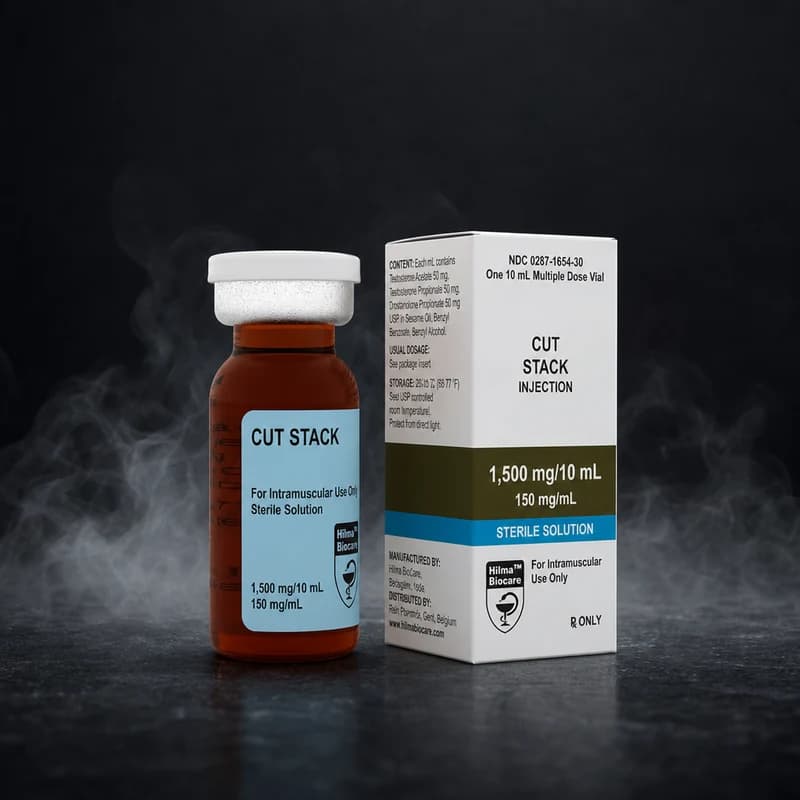
Contraindications: Ripped 150 is contraindicated in individuals with known hypersensitivity to any of the three active compounds (Testosterone Propionate, Trenbolone Acetate, Drostanolone Propionate) or to any component of the oil-based carrier. It must not be used by individuals under 18 years of age, those with existing cardiovascular disease, uncontrolled hypertension, active liver pathology, or prostate/breast carcinoma. Women of childbearing potential should not use this product due to significant virilisation risk from all three androgenic compounds.
Side Effects: Androgenic effects — including acne, accelerated scalp hair thinning in genetically predisposed individuals, and increased body hair — are possible with all three compounds. Trenbolone Acetate carries an elevated risk of night sweats and cardiovascular strain, including elevated resting heart rate and reduced aerobic capacity. Testosterone Propionate contributes to oestrogen-related effects via aromatisation; Drostanolone Propionate is non-aromatising but androgenically potent. Injection-site discomfort is typical with propionate-esterified compounds and can be mitigated by site rotation.
Monitoring: Haematocrit, haemoglobin, blood pressure, and lipid panel (LDL/HDL ratio) should be assessed at baseline and at the midpoint of any cycle. Liver enzyme markers (ALT, AST) and PSA screening are recommended for cycles exceeding six weeks. The rapid bioavailability of all three esters means hormonal changes — both desired and adverse — manifest within 24–72 hours; any severe adverse cardiovascular signals require immediate cycle cessation.
PCT: An aggressive SERM protocol (e.g. Nolvadex or Clomid at clinically directed doses) is mandatory and should commence 3–5 days after the final Ripped 150 injection, aligned to the rapid clearance of the acetate and propionate esters. A blood panel confirming the onset of LH and FSH recovery is recommended before adjusting SERM dose. Failure to initiate PCT within the 3–5 day window may unnecessarily prolong HPG axis suppression despite short ester clearance.

 Hardcore Cutting