Receptor Tolerance in Context: What Desensitization Means for Methenolone Users
Methenolone Acetate is an orally active anabolic agent whose clinical utility is best understood through the lens of androgen receptor tolerance — the progressive reduction in cellular responsiveness that can emerge when receptor occupancy is sustained without interruption. Unlike pharmacokinetic concepts such as half-life or bioavailability, tolerance is a downstream cellular event: sustained androgen receptor activation triggers compensatory downregulation of receptor protein expression, reducing the number of functional receptor units available for subsequent ligand binding. This mechanism places a biological ceiling on the productive duration of any anabolic cycle, independent of dose size.
Receptor Downregulation: Mechanism, Timeline, and Evidence
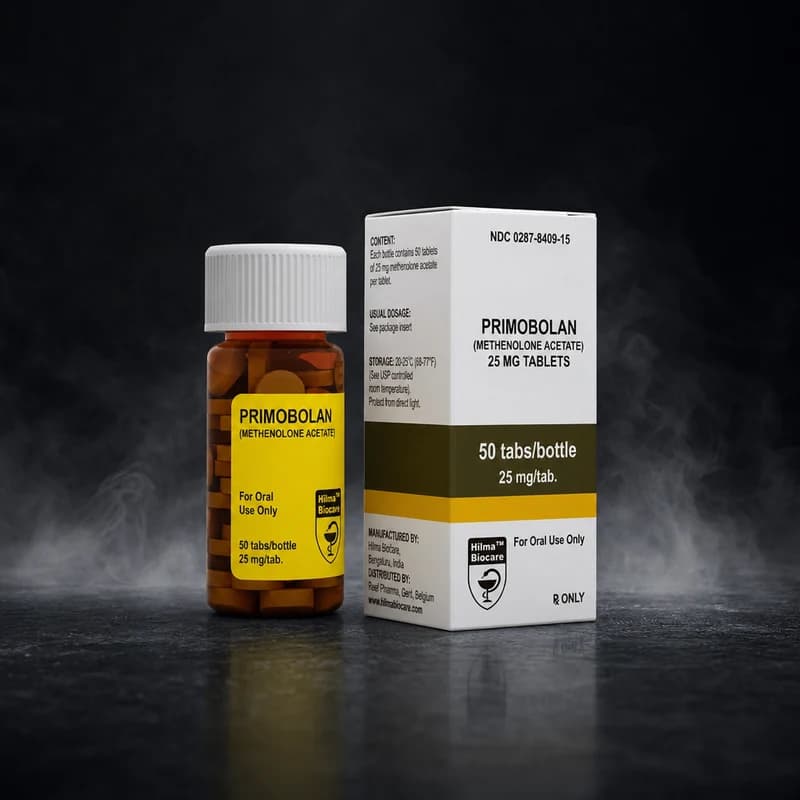
Androgen receptor downregulation follows ligand-induced internalization pathways, in which receptor–ligand complexes are trafficked intracellularly and targeted for proteasomal degradation rather than recycled to the membrane surface. Research in androgen-sensitive cell models documents measurable reductions in AR protein density within 48–72 hours of continuous agonist exposure, with the magnitude of downregulation correlating to both ligand concentration and receptor-occupancy duration. Magnus Pharmaceuticals Primobolan Tabs provide a controlled 25 mg unit dose, allowing practitioners to titrate daily receptor occupancy with precision — a practical advantage when cycle architects are actively managing tolerance risk. Compared to higher-potency androgens that saturate receptor populations rapidly, Methenolone Acetate's moderate binding affinity may produce a slower tolerance trajectory, but the fundamental downregulation mechanism remains operative.
Cycle Structure and the Recovery Window
Cycle-break recommendations for Methenolone Acetate derive directly from receptor biology rather than convention. After cessation of exogenous androgen administration, receptor protein re-synthesis restores surface AR density over a recovery window estimated at two to four weeks in skeletal muscle tissue, based on in vitro re-expression kinetics following ligand withdrawal. The practical implication is explicit: a cycle length exceeding this restoration window compounds desensitization without proportional anabolic return. The standard clinical principle of cycle-length equalling off-period length reflects this receptor-recovery interval.
Quality Assurance: Batch Testing and Analytical Standards
Every Magnus Pharmaceuticals Primobolan Tabs lot is subject to batch-specific analytical release: HPLC quantification confirms per-tablet Methenolone Acetate content against the 25 mg label claim, while LAL (limulus amebocyte lysate) endotoxin screening and microbiological environmental monitoring are conducted under GMP-classified production conditions. Third-party batch testing provides an independent potency and identity check, ensuring that receptor-engagement calculations made by the user are based on a verified dose rather than a nominal one.

 Lab Tested