First Steroid Cycle: A No-Nonsense Beginner Protocol
Why your first cycle should be testosterone-only: dosing, bloodwork, PCT and realistic expectations.
First Steroid Cycle: A No-Nonsense Beginner Protocol
Your first anabolic cycle should be simple, controllable, and well monitored — in practice that almost always means a testosterone-only cycle with a long ester, backed by bloodwork before, during, and after, plus a properly planned post-cycle therapy (PCT). Anyone who starts with three compounds at once loses the ability to tell which substance causes which effect. This guide covers why testosterone is the correct foundation, what to have on hand before the first injection, and what results are realistic — without glossing over the risks.
TL;DR
- A first cycle should be one compound: testosterone enanthate or cypionate, 300–500 mg per week for 10–12 weeks.
- Get baseline bloodwork (hormones, lipids, liver, hematocrit) before the first injection — without it, everything afterwards is guesswork.
- Have PCT medication (tamoxifen and/or clomiphene) and an aromatase inhibitor on hand before you start, not when problems appear.
- Inject twice weekly for stable blood levels; learn sterile intramuscular technique before day one.
- Realistic outcome: roughly 4–8 kg of mass including some water — bigger forum promises usually mean higher doses and higher risk.
- Under 25, less than two years of consistent training, or cardiovascular/psychological preconditions: do not start.
Why Testosterone Is the Correct First Cycle
One principle has proven itself for decades: one compound, one goal, full control. Testosterone is the obvious choice:
- Your body already knows it. Your organism has every mechanism to metabolise testosterone — via aromatisation to estradiol and via 5-alpha-reduction to DHT. Side effects like water retention, gynecomastia, or acne are therefore comparatively predictable.
- Full suppression happens anyway. Every exogenous anabolic shuts down natural production (the HPTA axis). On a testosterone cycle, the missing production is replaced one-to-one — libido, wellbeing, and energy stay intact.
- Manageable troubleshooting. If a side effect appears, you know which compound is responsible. With a three-drug stack, that is impossible.
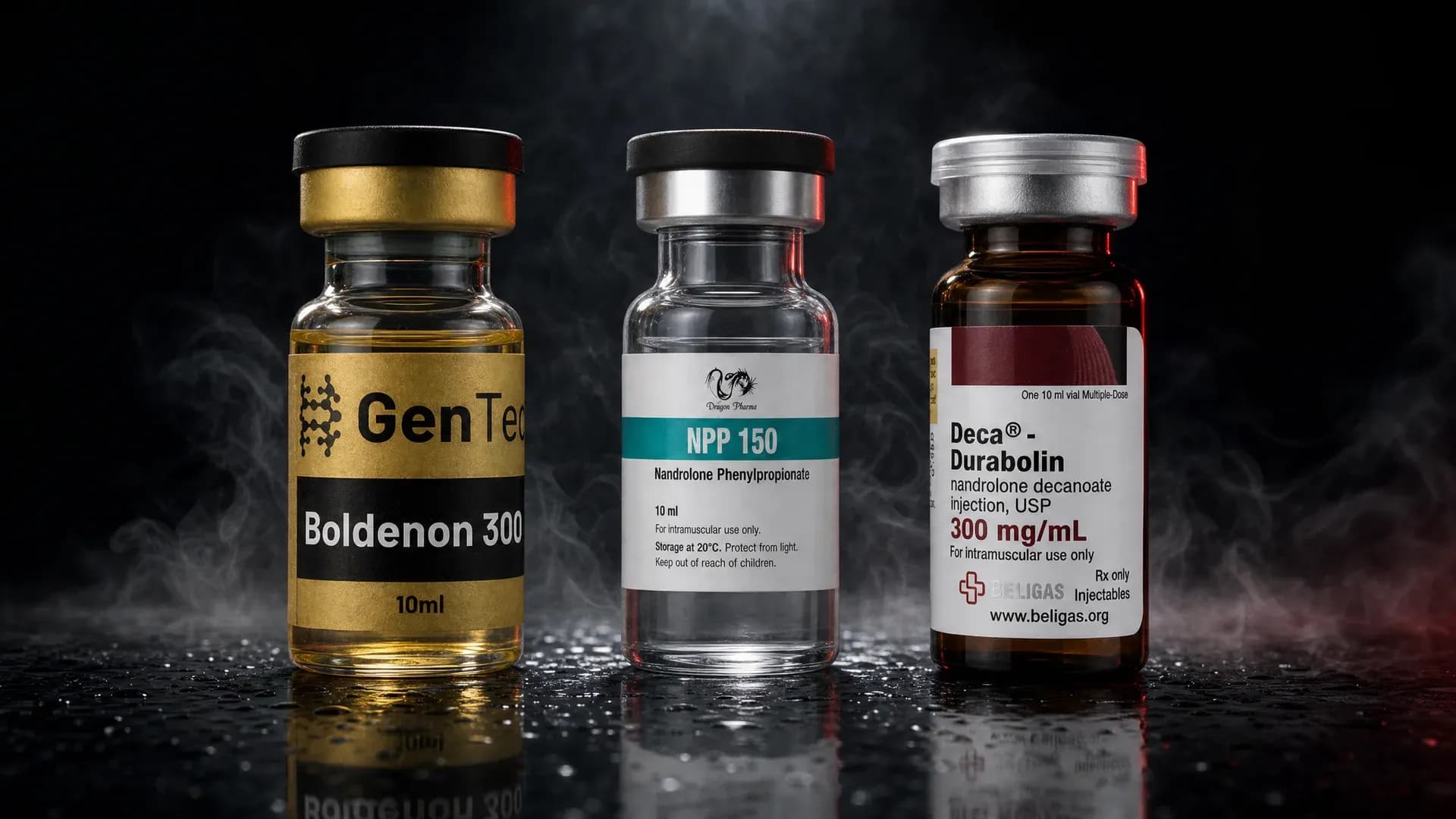
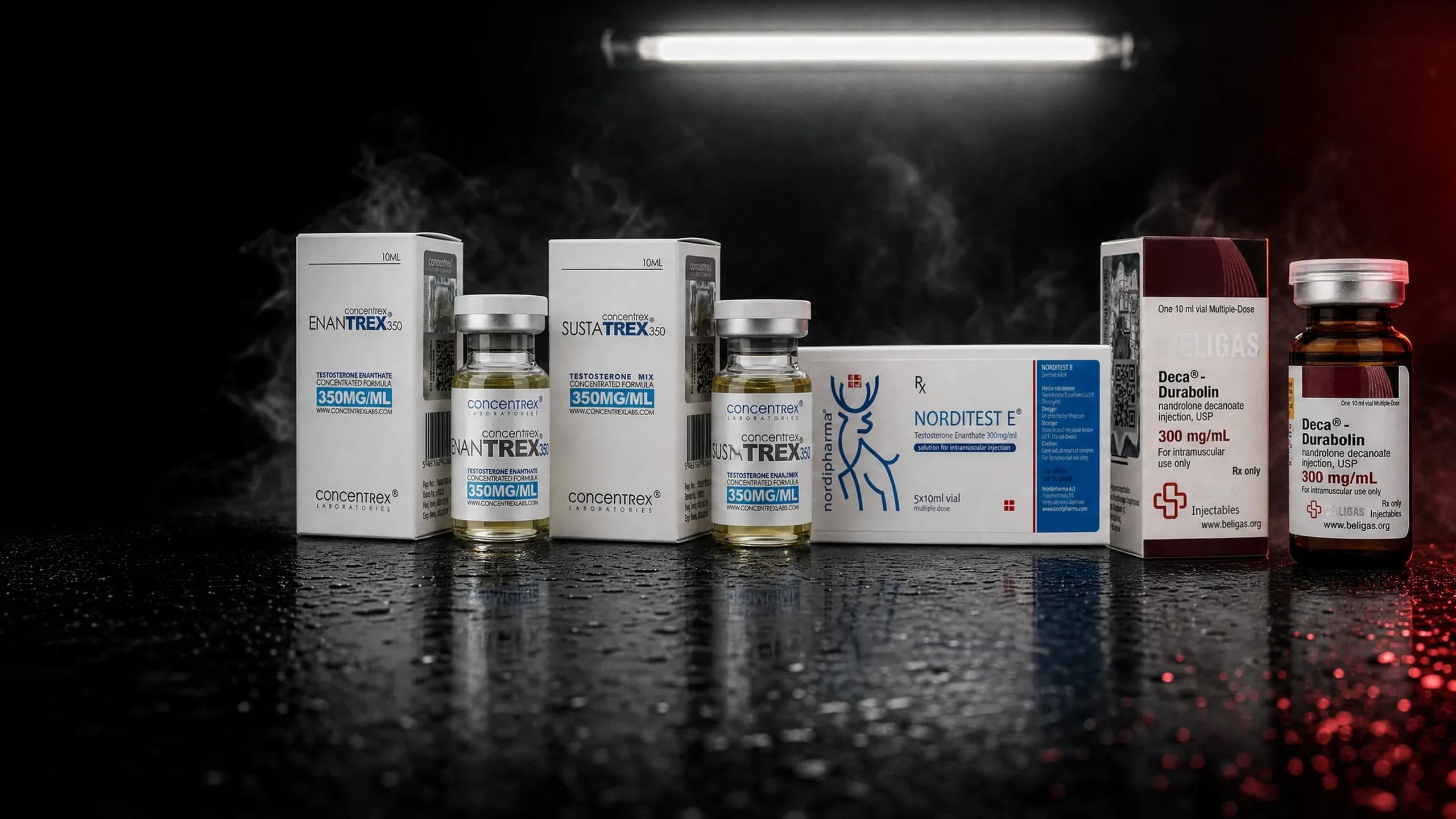
In most cases the choice falls on a long ester such as enanthate or cypionate. The ester determines only the release speed, not the effect. Long esters are injected once or twice per week and deliver stable blood levels — ideal for beginners. Under testosterone enanthate you will find the common preparations, for example Test ENA 250 by Master Pharma at the standard 250 mg/ml concentration.
The Protocol: Dose, Duration, Structure
The most widely used beginner dose is 300–500 mg of testosterone per week over 10–12 weeks. More is not necessary: the difference in muscle gain between 500 and 750 mg is far smaller for first-time users than the difference in side effects. The body responds especially sensitively on a first cycle — even moderate doses produce pronounced results.
Element | Recommendation | Notes |
|---|---|---|
Compound | Testosterone enanthate or cypionate | Long ester, stable blood levels |
Weekly dose | 300–500 mg | Split into 2 injections (e.g. Mon/Thu) |
Cycle length | 10–12 weeks | Shorter is hardly worthwhile due to slow build-up |
Aromatase inhibitor (AI) | Only if needed, guided by bloodwork | Not prophylactically |
PCT start | 14–21 days after the last injection | Depends on ester half-life |
PCT duration | ~4 weeks | Tamoxifen and/or clomiphene |
Twice-weekly injection (for example Monday and Thursday) keeps blood levels markedly more stable than a single weekly shot — stable levels mean smaller estradiol fluctuations and fewer side effects. Do not raise the dose mid-cycle out of impatience: gains on a clean first cycle realistically sit at 4–8 kg of mass (including some water), and more dramatic forum promises usually mean higher doses and higher risks.
What to Have on Hand Before You Start
The most common beginner mistake is starting the cycle first and sourcing support medication later. By the time nipples itch or the cycle ends, shipping times become your problem. All of the following belongs in your drawer before the first injection:
- Aromatase inhibitor (anastrozole): not prophylactically, but for the case that bloodwork and symptoms show estradiol climbing too high. Typical response dosing is 0.25–0.5 mg two to three times per week, adjusted by blood values. Having Arimidex 1mg ready means reacting within a day instead of two weeks.
- PCT medication: tamoxifen and clomiphene are the standard tools for restarting natural production — see below. Preparations such as Nolvadex 10mg and Clomid 50mg belong in the plan from day one.
- Injection supplies: sterile syringes and needles (a fresh set per injection — never reuse), alcohol swabs, a sharps container. Enough for twelve weeks plus spare.
- A bloodwork plan: fixed dates for baseline, mid-cycle, and post-PCT labs, arranged in advance.
Pre-Cycle Bloodwork: The Non-Negotiable Baseline
Running a cycle without bloodwork is flying blind. Three measurement points are standard.
Before the cycle (baseline): total and free testosterone, LH, FSH, estradiol, plus a full blood count (especially hematocrit), lipid panel, liver values (ALT, AST, GGT), kidney values, and blood pressure. If the baseline is already abnormal — low testosterone, elevated liver values — that needs medical clarification first, not a cycle on top.
Mid-cycle (around week 5–6): estradiol (determines AI need), hematocrit (well above 52 % is a cardiovascular risk), lipids, and blood pressure.
After PCT (about 4–6 weeks after the last SERM dose): total and free testosterone, LH, FSH, estradiol. Only this check shows whether the HPTA axis is actually running again. A detailed overview of the key markers is in Blood Tests on a Steroid Cycle: 12 Key Markers & Reference Values.
Injection Basics
Intramuscular injection is a skill, and the first weeks of a cycle are the wrong time to improvise it. The fundamentals: a fresh needle and syringe every time, disinfected skin, correct site selection (glute, ventrogluteal, lateral thigh, or deltoid), and slow, steady administration. Sloppy hygiene is behind most preventable complications — abscesses are far more common than any exotic side effect. Post-injection pain (PIP) is normal in the beginning, but correct technique minimises it. The ventrogluteal site combined with the Z-track method is the most forgiving option for beginners; the full walkthrough is in IM Injection Technique: Ventrogluteal & Z-Track — Eliminating PIP.
Side Effects: What Can Realistically Happen
Testosterone has a well-researched side-effect profile — that makes it controllable, not harmless:
- Aromatisation to estradiol: water retention, elevated blood pressure, and gynecomastia. Early gyno announces itself through sensitive, itchy, or hardening nipples — act then, do not wait.
- Androgenic effects: acne, oily skin, accelerated hair loss with genetic predisposition (via DHT). Lost hair does not come back.
- Suppression of natural production: the HPTA axis shuts down completely. Without PCT, recovery takes months — with low energy, lost libido, and depressed mood.
- Lipids and cardiovascular: steroids worsen the cholesterol profile (HDL drops, LDL can rise), frequently raise blood pressure, and increase hematocrit. Measurable on practically every cycle.
- Psychology: mood swings, irritability, sleep problems — highly individual, but not rare.
An aromatase inhibitor should be used only when bloodwork confirms elevated estradiol with symptoms. Fully crashed oestrogen is its own problem: joint pain, worse lipids, lost libido. The target is estradiol in the upper-normal range, not zero.
The PCT: Restarting Your Own Production
After a suppressive cycle, a post-cycle therapy is not optional — it decides whether you keep your results and your hormonal health. The tools of choice are SERMs (selective estrogen receptor modulators). They block oestrogen receptors at the hypothalamus and pituitary; the body responds with increased LH and FSH, and those hormones stimulate the testes to produce testosterone again.
The standard PCT:
- Tamoxifen (Nolvadex): 20–40 mg per day for about 4 weeks (commonly 40/40/20/20 or a flat 20 mg). Well tolerated and the foundation for most.
- Clomiphene (Clomid): 25–50 mg per day, likewise about 4 weeks — alone or combined. Side effects: mood swings, rarely visual disturbances; if those appear, discontinue. An alternative is enclomiphene, the isolated active isomer without clomiphene's side-effect baggage — covered in Enclomiphene for PCT: The Cleaner SERM. A full range of PCT preparations is listed under PCT.
Timing depends on the ester — the most commonly misunderstood point. After long esters like enanthate or cypionate, it takes 14–21 days after the last injection before blood levels fall far enough for a PCT to grip. Start too early and the SERMs are wasted while exogenous testosterone still suppresses the axis; start too late and you spend unnecessary weeks in a hormonal hole. Low mood and declining strength in the first PCT weeks are normal — keep training and nutrition conservative.
Mistakes That Ruin First Cycles
- Stacking multiple compounds. Three drugs means no troubleshooting and triple the side-effect surface. Testosterone-only is not the boring option — it is the only rational one.
- No support medication on hand. Gyno does not wait for your parcel. Neither does the end of the cycle.
- Prophylactic AI use. Crashing estradiol "just in case" trades one set of side effects for another.
- Raising the dose out of impatience. 500 mg feels slow in week four and works in week eight.
- Skipping bloodwork. Without values you are not managing a cycle, you are hoping.
- Expecting a transformation. A cycle accelerates what training and nutrition would do anyway. If your lifestyle does not change, you lose most of the gains afterwards.
- Unvetted sources. The black market is full of underdosed or contaminated products; verified sources are part of risk control. At ForgeMax, every listed lab is checked against batch verification before it enters the catalogue.
When NOT to Start
Honest harm reduction includes the cases where the correct first cycle is none at all:
- Under 25: the HPTA axis is often not fully mature before the mid-twenties; intervention carries a risk of lasting disruption.
- Less than two to three years of consistent, progressive training: natural gains in this phase are large anyway — a cycle cannot compensate for training or nutrition incompetence.
- Existing cardiovascular disease, liver problems, or psychological preconditions: a cycle is contraindicated.
- Abnormal baseline bloodwork: clarify medically first.
- Unstable life circumstances: a cycle demands twelve-plus weeks of disciplined training, nutrition, sleep, and monitoring. If that foundation is missing, so is the point.
FAQ
Is 250 mg of testosterone per week enough for a first cycle?
300–500 mg per week is the standard starting range because the ratio of results to side effects is most favourable there. Some beginners see visible gains at 250 mg, but for many that dose mostly just replaces the suppressed natural production. Above 500 mg is not sensible for a first cycle.
Can I do my first cycle with tablets instead of injections?
An oral-only cycle without a testosterone base is a poor idea. Oral 17-alpha-alkylated compounds stress the liver and lipid profile far more and suppress natural production just as much — but do not replace the missing testosterone. The frequent result is a hormonal low during the cycle: bad mood, no libido, weak recovery.
How long until my hormones normalise after the cycle?
With a properly executed PCT, LH, FSH, and testosterone normalise in most men within 4–8 weeks of starting PCT. Without PCT, recovery can take several months. The only way to know is a blood test 4–6 weeks after PCT ends. If values remain low long-term, medical evaluation is needed.
Do I need an aromatase inhibitor during the cycle?
Not automatically. An AI is appropriate only when bloodwork shows clearly elevated estradiol and symptoms such as water retention, high blood pressure, or sensitive nipples appear. Used prophylactically, it often pushes oestrogen too low — with joint pain, worsened lipids, and lost libido as consequences. The decision runs through the week 5–6 blood test, not guesswork.
What happens if I skip the PCT?
Natural testosterone production stays suppressed — often for months. In that phase you risk losing the muscle you built, along with low energy, depressed mood, lost libido, and erectile problems. Many who quit without a PCT reach for the next cycle out of frustration and slide into permanent use.
A first cycle done right is unglamorous: one compound, moderate dose, bloodwork on schedule, support medication in the drawer, and a PCT executed as seriously as the cycle itself. The lifters who keep their gains and their health are not the ones who took the most — they are the ones who planned the most. Respect the compound, respect the lab values, and respect the fact that no result is worth a permanent hormonal problem.
This article is for educational purposes only and does not constitute medical advice or a recommendation to use any substance. Anabolic steroids and related compounds are prescription medicines in most European countries; non-medical use carries significant health risks. Consult a physician before any decision and have bloodwork professionally evaluated.