Does Ostarine Suppress Testosterone — and How Much Does It Matter at 10 mg?
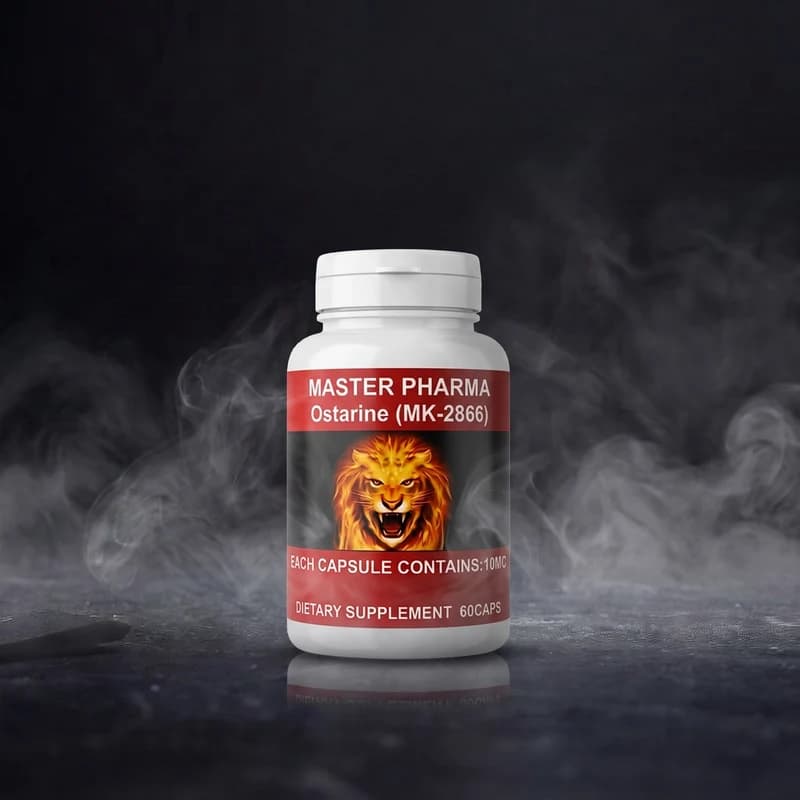
Ostarine (MK-2866) is a selective androgen receptor modulator whose degree of HPTA suppression scales directly with dose and cycle length, making 10 mg/day a clinically relevant starting point for users who want to gather personal suppression data before escalating. Published research (Dalton et al., Phase II trial data) observed measurable but modest LH and FSH suppression at doses of 1–3 mg in elderly populations; extrapolated to the bodybuilding range of 10–25 mg, suppression becomes increasingly pronounced above 15 mg and extends beyond 6 weeks. At the 10 mg dose provided by this Vital Research format, total testosterone suppression in healthy males is typically moderate — serum LH suppression of 20–40 % compared to baseline is commonly self-reported — and generally reversible without pharmacological intervention in cycles under 8 weeks.
Vital Research Ostarine supplies MK-2866 at precisely the dose where suppression remains sub-clinical for most users, enabling a natural recovery window rather than mandatory PCT.
Which Bloodwork Markers Reveal Suppression — and When to Act
Three primary markers determine whether a mini-PCT is warranted: serum total testosterone, LH (luteinizing hormone), and FSH (follicle-stimulating hormone). A post-cycle panel drawn 2–4 weeks after the last tablet provides a suppression snapshot. If total testosterone drops below 400 ng/dL and LH remains below 2 mIU/mL at week 4 of recovery, a structured mini-PCT — typically 4 weeks of Enclomiphene (12.5–25 mg/day) or Tamoxifen (20 mg/day, tapering to 10 mg) — is clinically justified. Compared to post-anabolic-steroid recovery, which routinely requires 6–12 weeks of SERMs plus hCG, a well-timed Ostarine mini-PCT rarely exceeds 4 weeks in duration.
Suppression Recovery Timeline at 10 mg
MK-2866 carries a half-life of approximately 24 hours; plasma clearance is essentially complete within 5–7 days of the last dose. Natural LH pulsatility typically resumes within 1–2 weeks at the 10 mg dose level. Bloodwork at week 3–4 post-cycle determines whether endogenous testosterone has recovered to baseline — if it has, no pharmacological support is needed.
Batch Tested Quality and Dose Precision
Vital Research assigns each 30-tablet Ostarine blister a unique lot code tied to a compound-specific certificate of analysis. HPLC (High-Performance Liquid Chromatography) quantifies MK-2866 content against a certified reference standard; LAL (Limulus Amebocyte Lysate) endotoxin assay confirms microbiological safety independently for every batch. At 10 mg per tablet — the lowest concentration in the Vital Research SARM range — dose precision is especially critical: a 2 mg deviation represents a 20 % variance, which is why independent batch verification is non-negotiable at this concentration.

 Lab Tested