YK-11 as a Selective Androgen Receptor Modulator: What 'Selective' Really Means
Myostine (YK-11) occupies a structurally unique position in SARM pharmacology: it is a synthetically derived steroidal compound that activates androgen receptors through tissue-biased agonism rather than the systemic, non-discriminating receptor saturation characteristic of classical AAS. In practical terms, selectivity means that YK-11 recruits co-activator proteins preferentially in muscle and bone tissue rather than in the prostate, sebaceous glands, or the hypothalamic–pituitary axis — the primary sites of androgen-related adverse effects in steroid users. This receptor-biased signaling is the mechanistic foundation that separates SARMs from traditional steroids at a molecular level.
SARMs vs. Classic AAS: The Selectivity Trade-Off
Compared to testosterone or nandrolone, YK-11 demonstrates a narrower receptor activation footprint — binding androgen receptors with high affinity (Ki in the low-nanomolar range in preclinical assays) while producing measurably less androgenic signal in tissues that express 5-alpha reductase. YK-11 additionally functions as a partial Follistatin inducer, suppressing myostatin activity; this myostatin-inhibiting pathway operates independently of direct AR agonism, a dual mechanism not observed in classical AAS. Where steroids exert anabolic effects almost entirely through AR saturation plus aromatase conversion, YK-11 adds a second anabolic vector without the estrogenic cascade. The selectivity advantage, however, is relative — at research-grade doses, suppression of endogenous testosterone production remains a documented pharmacodynamic consequence, shared with conventional androgens.
Where Tissue Selectivity Has Documented Limits
No current SARM achieves complete organ selectivity. Vital Research formulates each 5 mg Myostine tablet to allow controlled, consistent dosing — HPLC quantification confirms active YK-11 content against a reference standard, and LAL (Limulus Amebocyte Lysate) endotoxin testing validates microbiological safety batch-by-batch. Researchers using YK-11 should note that liver transaminase elevation has been observed in in-vitro hepatocyte studies, suggesting a hepatotoxic liability comparable in mechanism — if not magnitude — to 17-alpha-alkylated oral steroids. Monitoring liver enzymes (ALT/AST) remains a standard protocol recommendation regardless of the compound's SARM classification.
Dosing Format and Research Utility
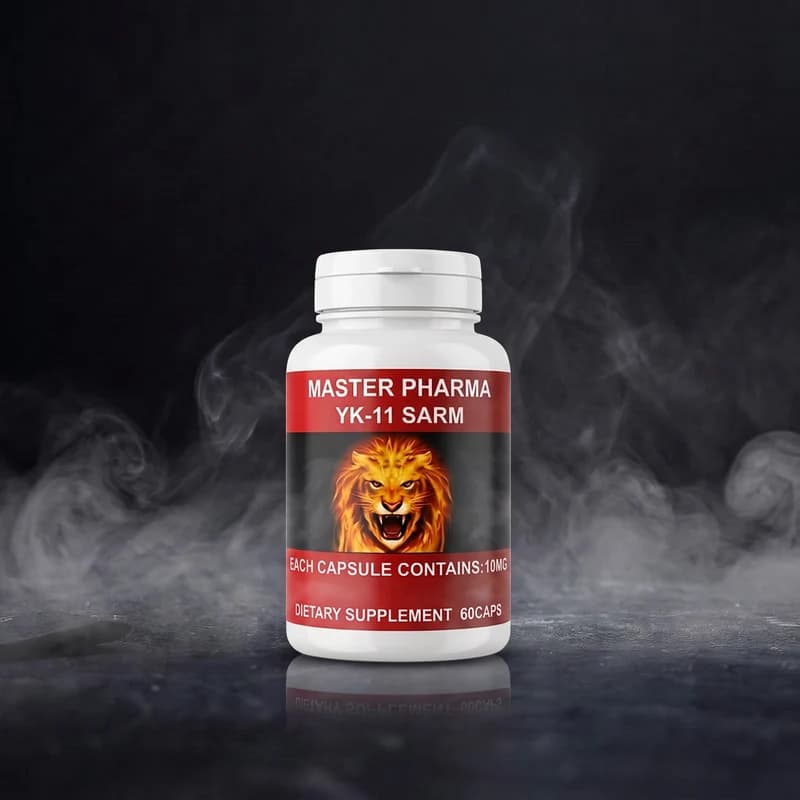
The 5 mg/tablet concentration is the highest single-tablet dose available in this Vital Research SARM series, enabling flexible titration across a 5–15 mg/day research range without compound tablet splitting. Thirty tablets per blister provides a standard four-to-six-week supply at common research protocols. GMP-aligned manufacturing ensures content uniformity across all 30 tablets — critical when dose precision determines the validity of selectivity-focused research outcomes.

 Pharma Grade