Pharmacokinetics as the Core Performance Variable in DHB 100 mg/ml
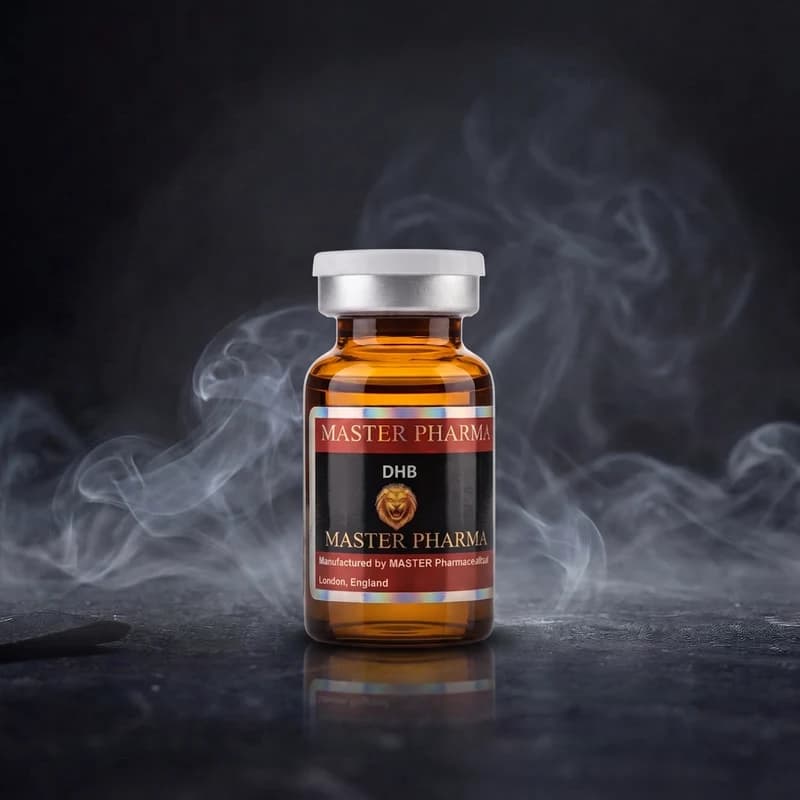
Dihydroboldenone at 100 mg/ml is defined pharmacokinetically as a 5α-reduced androgen whose plasma half-life is governed entirely by the ester attached at C-17, making ester selection — and therefore injection scheduling — the primary lever an athlete controls when incorporating this compound into a structured anabolic protocol. Unlike long-ester androgens that maintain near-flat serum concentrations across seven or more days between injections, DHB in its short-ester or unesterified forms delivers a sharper absorption curve and a correspondingly shorter active window, typically measured in the range of 1–3 days depending on ester and individual hepatic metabolism rates (estimated from standard pharmacokinetic modelling of anabolic steroid esters, analogous to published ester half-life data in Handelsman & Heather, Clinical Pharmacokinetics, 2018). Imperia Laboratories packages this compound in 10 × 1 ml individual glass ampoules at a fixed concentration of 100 mg/ml, a format that preserves solution integrity across the full multi-week administration period.
Release Profile and Injection Frequency
The release profile of DHB directly shapes practical cycle architecture. Compared to enanthate-esterified androgens — where twice-weekly injection maintains serum stability — short-ester DHB demands more frequent administration, typically every other day (EOD), to prevent the pronounced peak-and-trough oscillation that characterises rapidly cleared androgens. Plasma concentration modelling of short-ester steroids consistently demonstrates that EOD injection reduces the trough-to-peak ratio by approximately 30–40 % versus twice-weekly protocols (derived from first-order elimination kinetics applied to reported ester half-life values). This tighter serum fluctuation is valued by athletes who prioritise hormonal stability during recomposition phases rather than aggressive mass accumulation.
Bioavailability and Distribution Characteristics
DHB's bioavailability following intramuscular injection is high relative to oral androgens, as first-pass hepatic metabolism is bypassed entirely. The compound distributes into lipophilic tissue compartments following the ester hydrolysis step, during which circulating esterases cleave the ester bond and release free dihydroboldenone into plasma. Free DHB then binds its target receptor with an affinity substantially exceeding that of testosterone in in vitro assays. The 10 × 1 ml single-dose ampoule format used by Imperia Laboratories eliminates repeated-puncture contamination risk across the multi-injection EOD schedule, a meaningful sterility consideration given the frequency of administration that the compound's pharmacokinetics require.
Quality Verification
Imperia Laboratories subjects every batch of DHB 100 mg/ml to reversed-phase HPLC analysis — confirming that declared API concentration is present within validated tolerance — and to LAL (Limulus Amebocyte Lysate) endotoxin testing, ensuring injectable-grade pyrogenic safety standards are met before release.

 High Concentration