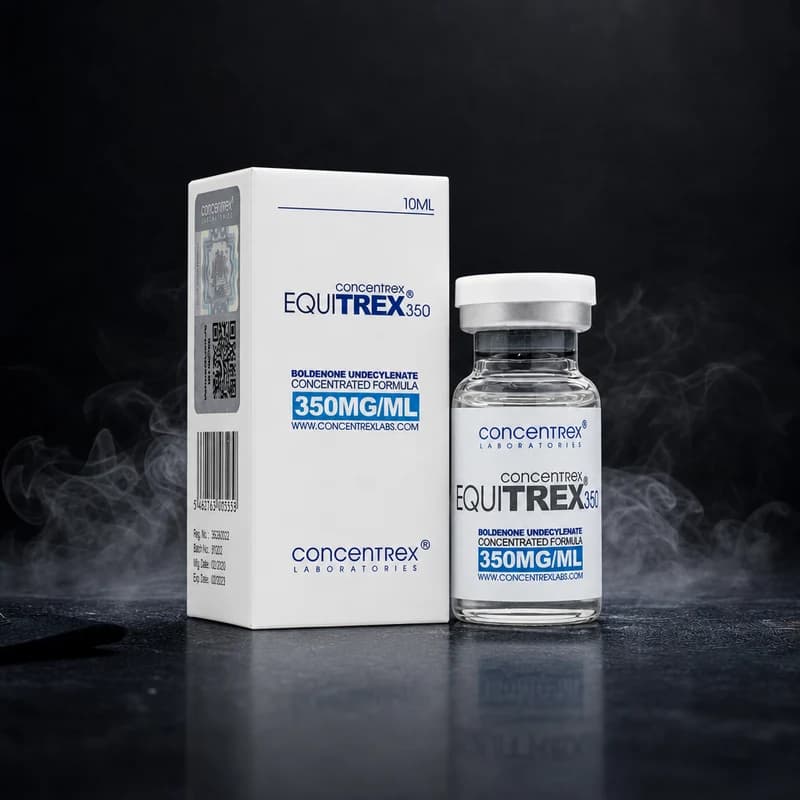
Boldenone Undecylenate as an Androgen Receptor Agonist: Mechanism at the Molecular Level
Boldelad delivers Boldenone Undecylenate — a 1,4-diene analogue of testosterone — whose core pharmacological identity rests on direct, selective engagement with the androgen receptor (AR). Boldenone occupies the androgen receptor's ligand-binding domain with an affinity estimated at approximately 50 % of dihydrotestosterone's binding strength, as measured in competitive radioligand displacement assays. That affinity level positions boldenone clearly above nandrolone (approximately 92 % of DHT) in absolute AR-binding figures, yet boldenone's 1,4-diene A-ring modification prevents 5α-reductase from converting it to a more potent dihydro metabolite — a biochemical distinction that meaningfully narrows the androgenic side-effect window compared to testosterone itself.
DHT-Lineage Chemistry and Its Downstream Consequences
Boldenone's chemical lineage traces directly to testosterone but diverges at the 1,2-position double bond, categorising it structurally within the DHT derivative family even though it resists 5α-reduction. This structural feature produces two practical consequences: aromatase conversion occurs at roughly half the rate seen with testosterone (confirmed by in-vitro enzyme kinetic studies), and the resulting anabolic-to-androgenic ratio tilts toward tissue-building over virilisation. Driada Medical formulates Boldelad at 250 mg/ml — a concentration that delivers clinically relevant weekly doses between 300 mg and 600 mg in injection volumes of 1.2 ml to 2.4 ml, keeping each administration practical for intramuscular use.
Receptor Activation Pathway and Anabolic Signalling
Once free boldenone reaches target tissue, the AR–ligand complex translocates to the nucleus and upregulates androgen-response elements (AREs) governing nitrogen retention, IGF-1 expression, and satellite cell proliferation — the three primary drivers of hypertrophic adaptation. Boldenone additionally stimulates renal erythropoietin (EPO) secretion, adding a haematopoietic dimension to its receptor-mediated anabolic profile. Compared to an equal milligram dose of testosterone enanthate, boldenone undecylenate produces a smaller oestradiol rise and a more gradual but sustained elevation of red blood cell indices, making haematocrit monitoring an essential part of any cycle using this compound.
Driada Medical Manufacturing and Batch Quality
Each 10 ml vial of Boldelad undergoes HPLC-based potency confirmation to verify declared concentration accuracy, alongside LAL (Limulus Amebocyte Lysate) endotoxin testing to meet injectable-grade sterility criteria. Production takes place within a GMP-certified environment, ensuring that every released batch meets the quality standards required for parenteral pharmaceutical products.

 High Concentration