Boldenone Undecylenate (Equipoise): Cycle, Dosage, and the EQ Appetite Effect
Boldenone undecylenate is a slow, long-ester injectable: cycles usually run 12–16 weeks at 300–600 mg/week with testosterone. Learn how the EQ appetite effect, low aromatisation and rising haematocrit shape planning.
Boldenone Undecylenate (Equipoise): Cycle, Dosage, and the EQ Appetite Effect
TL;DR
- Boldenone undecylenate (EQ) is a long-ester injectable anabolic steroid with a half-life of roughly 14 days, originally developed for veterinary use, with slow saturation and very slow clearance.
- Common performance doses run 300–600 mg per week alongside a testosterone base; cycles need 12–16 weeks because the ester takes four to six weeks to reach meaningful blood levels.
- The famous "EQ appetite effect" is real for many users — a noticeable increase in hunger that makes EQ popular for lean gaining phases — but it is individual, not guaranteed.
- EQ raises haematocrit more aggressively than most injectables; regular blood donation or dose reduction may be necessary, and haematocrit monitoring is mandatory.
- Aromatisation is low (roughly half that of testosterone per milligram), but EQ can lower oestradiol at higher doses, so E2 bloodwork matters in both directions.
- Detection times are extremely long — metabolites can be found for many months — making EQ unsuitable for tested athletes.
What Boldenone Undecylenate Is
Boldenone is a structurally modified form of testosterone: it carries a double bond between carbons 1 and 2, which reduces its affinity for aromatase and alters its androgenic behaviour. The result is an anabolic-androgenic profile of roughly 100:50 — about as anabolic as testosterone on paper, but roughly half as androgenic. The undecylenate ester is an eleven-carbon chain, one of the longest esters in common use, and it dictates almost everything practical about the compound: a half-life in the region of two weeks, a slow build-up to peak blood levels, and an equally slow decline after the last injection.
The compound was developed as a veterinary preparation, marketed for decades under the name Equipoise for use in horses, and was never approved for human medical use anywhere. That origin matters for expectations: there is no human clinical trial literature to draw on, dosing norms come entirely from underground and performance practice, and product quality depends wholly on the manufacturer. Anyone comparing compounds in this class will find it useful to read how EQ stacks up against the nandrolone esters, which are often considered for the same lean-bulk role — the differences are mapped out in Equipoise Vs DECA Vs NPP Boldenone And Nandrolone Esters Compared.
Effects and the Appetite Question
EQ's reputation rests on steady, dry, slow gains rather than dramatic scale movement. With aromatisation at roughly half the rate of testosterone per milligram, water retention is modest, and the muscle gained tends to be comparatively lean and keepable. Users typically report improved vascularity, gradual strength increases, and enhanced endurance — the last of these often attributed to EQ's pronounced stimulation of erythropoiesis, which raises red blood cell count and with it oxygen-carrying capacity. That same mechanism is also one of its main hazards, covered in the side effects section below.
The appetite effect deserves its own discussion because it is the single most searched-for EQ trait. A large share of users — anecdotal consensus suggests a clear majority, though there are no controlled human data — report a marked increase in hunger within the first few weeks of a cycle. For someone running a lean gaining phase who struggles to eat in a surplus, this is a genuine practical benefit: eating 3,500 kcal of quality food stops feeling like a chore. For anyone cutting, however, the same effect is a liability, and it is the main reason EQ is rarely chosen for contest preparation despite its dry look.
Two honest caveats apply. First, the mechanism is not established — proposed explanations include effects on metabolism and on the erythropoietic drive increasing energy demand, but nobody has demonstrated this in humans. Second, the effect is individual: some users feel nothing, and a minority even report reduced appetite or a general sense of unease on EQ. Do not build a nutrition plan around an effect you have not yet confirmed in yourself.
Dosage and Cycle Planning
Because the undecylenate ester releases so slowly, EQ punishes impatience. Blood levels do not approach steady state until weeks four to six, and most users report that the compound "arrives" somewhere between weeks five and eight. This drives two firm rules: EQ cycles must be long — 12 weeks is the floor, 14–16 weeks is typical — and EQ is always run with a testosterone base to supply adequate oestradiol and androgenic support, since boldenone suppresses natural production just as completely as any other anabolic steroid.
Dosing norms in practice cluster as follows:
Experience level | EQ per week | Testosterone base | Typical cycle length |
|---|---|---|---|
Beginner | 300–400 mg | 250–350 mg | 12–14 weeks |
Intermediate | 400–600 mg | 300–500 mg | 14–16 weeks |
Advanced | 600–800 mg | 400 mg+ | 14–16 weeks |
The weekly dose is usually split into two injections (for example Monday and Thursday), which keeps levels smoother and reduces injection volume per site. Dose-response follows the same diminishing-returns curve as every other anabolic: the step from 300 mg to 500 mg per week is clearly noticeable, while pushing past 600 mg adds modest benefit against a disproportionate rise in haematocrit, blood pressure, and — for many users — an anxious, wired feeling that higher-dose EQ is known for.
A representative intermediate cycle looks like this:
Week | EQ | Testosterone | Supporting actions |
|---|---|---|---|
0 | — | — | Baseline bloodwork: hormones, lipids, haematocrit, blood pressure |
1–14 | 2 × 250 mg/week | 2 × 200 mg/week | Surplus diet, training progression, no AI unless bloodwork demands |
6–8 | — | — | Mid-cycle bloodwork: E2 sensitive, haematocrit, lipids |
15–17 | None | None | Ester clearance — EQ lingers for weeks |
17/18–21/22 | PCT | PCT | SERM protocol, then post-PCT bloodwork |
The long clearance deserves emphasis: because the ester releases for three weeks or more after the final injection, PCT must start later than with testosterone enanthate — roughly 18–21 days after the last shot, not 14. Starting earlier means the SERMs are fighting still-circulating exogenous hormone.
Side Effects and Risks
EQ is often described as a "mild" compound. That is misleading shorthand. Its androgenic and estrogenic side effects are milder than testosterone's; its haematological side effects are not.
- Haematocrit elevation: this is the signature EQ risk. Boldenone stimulates red blood cell production strongly — historically it was investigated for anaemia treatment — and haematocrit climbs faster and further than on an equivalent testosterone dose. Values above roughly 0.54 increase blood viscosity and cardiovascular strain and warrant dose reduction or therapeutic phlebotomy.
- Suppression: complete shutdown of natural testosterone production within weeks, guaranteed, hence the need for a testosterone base and a properly timed PCT.
- Oestradiol effects in both directions: aromatisation is low, but many users find that EQ at moderate-to-high doses blunts their E2 — possibly through competition with testosterone for aromatase — producing low-oestrogen symptoms: joint aches, flat mood, poor libido. This is why E2 bloodwork matters here even though EQ "barely aromatises."
- Anxiety and cardiovascular strain: a notable minority of users report elevated resting heart rate, a wired or anxious feeling, and blood pressure increases, particularly above 600 mg per week. Combined with the haematocrit rise and HDL suppression, the cardiovascular load is the main long-term concern.
- Androgenic effects: acne and accelerated hair loss in genetically predisposed individuals — milder than testosterone, but not absent.
- Fertility: spermatogenesis is suppressed during the cycle; recovery is usual but not guaranteed on a schedule.
One more risk sits outside the body: detection time. Boldenone metabolites are detectable for many months — commonly cited figures run to five months or longer. For any athlete subject to drug testing, EQ is one of the worst possible choices.
Bloodwork and Monitoring
An EQ cycle without bloodwork is gambling with a compound whose main danger is invisible. You cannot feel a haematocrit of 0.56 until it expresses itself as a headache, breathlessness, or something worse. The minimum monitoring framework covers three draws — baseline, mid-cycle (weeks 6–8), and post-PCT — and should include:
- Haematocrit and haemoglobin: the single most important marker on EQ. Check at baseline and mid-cycle at minimum; many experienced users check monthly and donate blood if values climb.
- Total and free testosterone, LH, FSH: confirms the product is real mid-cycle and quantifies axis recovery after PCT.
- Oestradiol (sensitive assay): steering wheel for any AI decision, and on EQ equally important for catching low E2.
- Lipid panel (HDL, LDL, triglycerides): EQ suppresses HDL modestly to moderately; track the drift and the recovery.
- Blood pressure: home readings twice weekly; rising pressure plus rising haematocrit is the combination that ends cycles early.
- Kidney markers (creatinine, eGFR, optionally cystatin C): worth including given the increased blood viscosity and blood pressure load, and because boldenone has been linked to renal stress in animal data.
If mid-cycle haematocrit exceeds roughly 0.54, the rational responses are dose reduction, hydration, and therapeutic phlebotomy — not hoping it stabilises. If E2 comes back low with symptoms, the fix is usually lowering the EQ dose relative to testosterone, not adding anything.
Practical Notes
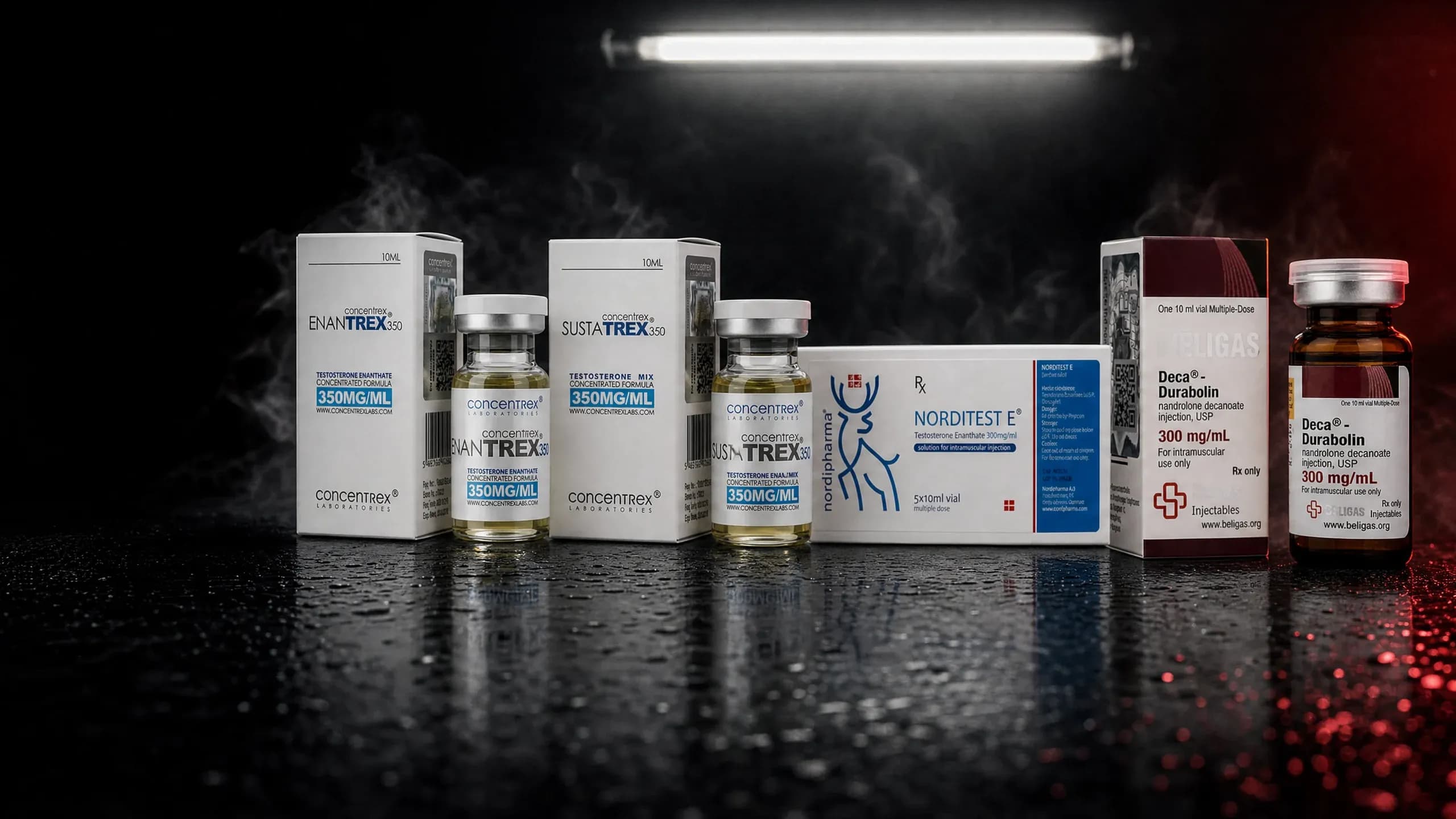
Concentrations and injection volume matter more with EQ than with shorter compounds, because cycles are long and cumulative injection volume is high. Underground and grey-market EQ has historically been supplied at concentrations from 200 mg/ml up to 300 mg/ml; higher concentrations reduce volume but often increase post-injection pain. We stock boldenone undecylenate from EU-verified labs, including Boldenone Undecylenate 200mg/ml 10x1ml Ampoules by Pharm-Tec in single-use 1 ml ampoules — the format many users prefer for dosing accuracy and sterility — and Boldenone Undecylenate 250mg/ml 10ml Vial by Hilma Biocare in a 10 ml multi-dose vial for those who want fewer ampoules to open across a 14-week run. The full range sits in the Boldenone Undecylenate category.
Injection technique follows the usual rules: rotate sites (glutes, ventroglutes, delts, quads), warm the oil to body temperature to reduce post-injection pain, and use strict sterile technique across what will be 28 or more injections over a cycle. Stacking-wise, EQ's role is the slow, dry anabolic in a lean bulk; it pairs poorly with rushed timelines and poorly with cutting phases for appetite-prone users. Those comparing it against more exotic anabolics will find that its pharmacology is conservative rather than extreme — a contrast worth understanding before considering compounds like trestolone, whose profile is examined in Trestolone Ment Pharmacology Effects And What Sets IT Apart.
Finally, plan the exit before the first injection. EQ's long tail means the cycle effectively continues for three weeks after you stop, PCT starts around day 18–21 post-last-shot, and full recovery verification requires bloodwork four to six weeks after the SERM protocol ends.
FAQ
How long does EQ take to kick in?
Blood levels build slowly because of the undecylenate ester's roughly two-week half-life. Most users notice appetite changes first, around weeks two to four, with visible strength, endurance, and physique effects arriving between weeks five and eight. If nothing has changed by week eight at an adequate dose, verify the product with mid-cycle bloodwork — underdosed EQ is common on the grey market. This slow onset is exactly why EQ cycles run 14–16 weeks rather than the 10–12 typical for testosterone enanthate.
Is the EQ appetite increase guaranteed?
No. A majority of users report noticeably increased hunger, usually within the first few weeks, but individual response varies widely — some feel little change, and a small minority report reduced appetite or general malaise. The mechanism has never been demonstrated in human studies, so treat it as a probable but unconfirmed effect. Do not choose EQ specifically for appetite stimulation, and do not plan a lean bulk's entire calorie strategy around an effect you may not personally experience.
Can I run EQ without a testosterone base?
Technically yes, practically a bad idea. Boldenone fully suppresses natural testosterone production, and its low aromatisation rate means it cannot supply adequate oestradiol on its own. Running EQ solo commonly produces low-testosterone and low-oestradiol symptoms mid-cycle: poor libido, flat mood, joint discomfort, and lethargy. A testosterone base of at least 200–300 mg per week supplies both hormones. The EQ-only cycles sometimes discussed online are a relic of pre-bloodwork-era thinking and not a rational protocol.
Does EQ increase anxiety?
A meaningful minority of users report anxiety, elevated resting heart rate, poor sleep, or a wired, irritable feeling on EQ, particularly above 500–600 mg per week. The cause is not established — proposed factors include cardiovascular strain from rising haematocrit and blood pressure, and individual neurosteroid responses. If you have a history of anxiety disorders, EQ is a poor choice, and if symptoms appear mid-cycle the sensible responses are dose reduction or discontinuation rather than pushing through.
How long before PCT should I stop EQ?
Stop the injections about 18–21 days before you plan to begin PCT. The undecylenate ester keeps releasing hormone for three weeks or more after the final shot, and starting SERMs while suppressive levels of exogenous hormone still circulate wastes the protocol. A typical timeline: last injection, three-week clearance gap, four-week SERM protocol such as tamoxifen 20 mg daily, then post-PCT bloodwork four weeks later to confirm the hypothalamic-pituitary-gonadal axis has actually restarted.
Is EQ detectable in drug tests?
Yes, and for an exceptionally long time. Boldenone metabolites can be detected in urine for five months or longer after the last injection — some reports cite detection windows approaching or exceeding a year with sensitive testing methods. This makes EQ one of the worst possible compounds for any athlete subject to anti-doping controls. No clearance trick or timing strategy reliably beats modern metabolite detection, so tested athletes should treat boldenone as simply off the table.
Conclusion
Boldenone undecylenate earns its place in lean-bulk planning through a coherent profile: slow, dry, keepable gains, modest estrogenic activity, and an appetite effect that makes eating in a surplus easier — for most users, most of the time. The costs are equally specific: the most aggressive haematocrit elevation of any commonly used injectable, a long suppression tail that delays PCT, a cardiovascular load that scales quickly past 600 mg per week, an anxiety response in a minority of users, and detection times measured in months. EQ should not be used by anyone under roughly 25, anyone with pre-existing haematological, cardiovascular, kidney, or lipid abnormalities, anyone with uncontrolled hypertension or an anxiety disorder, anyone subject to drug testing, and anyone unwilling to draw blood at baseline, mid-cycle, and post-PCT. The formula for those who do run it is unglamorous: 300–600 mg per week on a testosterone base, 14–16 weeks, haematocrit watched like a hawk, E2 checked in both directions, and a clearance gap respected before PCT begins. Boldenone rewards patience and punishes guesswork — treat the bloodwork as part of the cycle, not an optional extra.